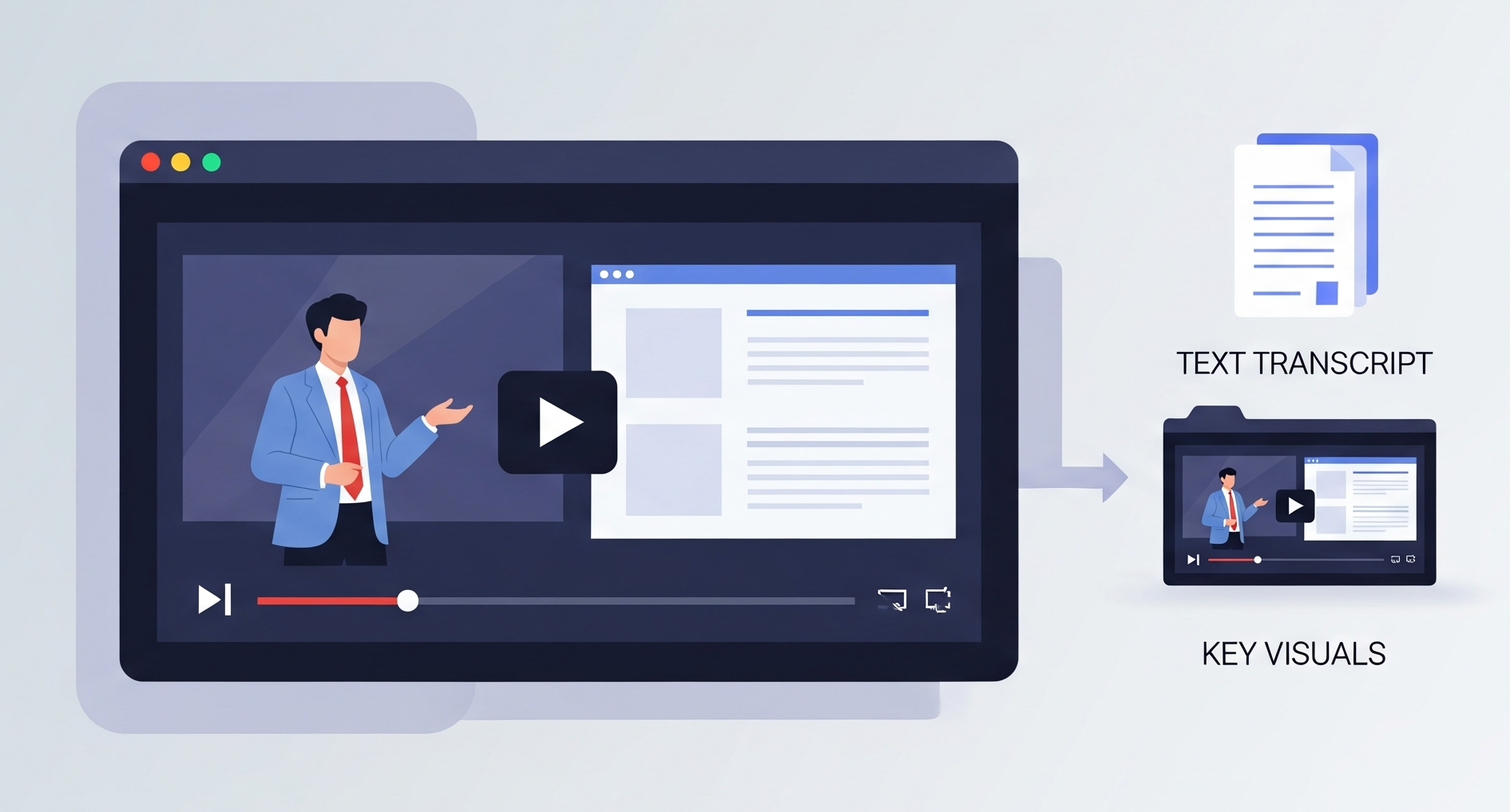
The way we capture, preserve and share knowledge is changing radically. Valuable content can be recorded in videos and then broken down by intelligent technology into individual, usable elements. This turns video from a passive medium into an active, searchable and reusable knowledge resource.
The challenge: knowledge trapped in videos
Videos are excellent for explaining complex processes and adding visual context. Their weakness is linearity. Knowledge in a video is often difficult to search, quote or access quickly. Finding one statement in a 60-minute recording can be slow and inefficient.

The solution: AI-supported breakdown into usable elements
A new generation of intelligent systems uses AI to break videos into their essential building blocks. Transcription turns spoken content into searchable text with precise timestamps. Screenshots and key scenes can be extracted as well. Together, these elements create a dynamic, visual guide.
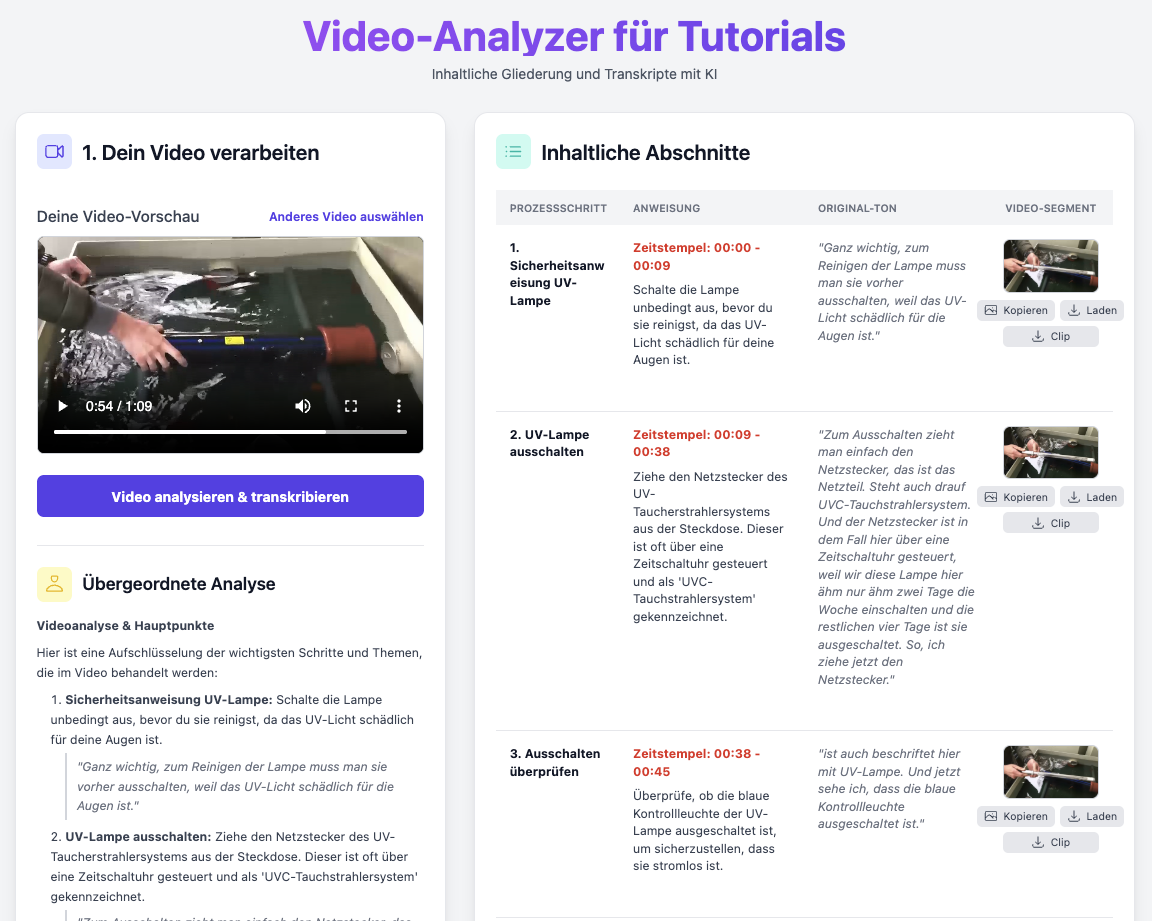
The video analyzer uses AI to turn videos into step-by-step instructions.
Strategic relevance for companies
This technology is highly relevant for preserving expert knowledge and supporting offboarding. An experienced technician, for example, can explain machine maintenance in a video. AI turns this into searchable documentation with transcript, timestamps and key images.
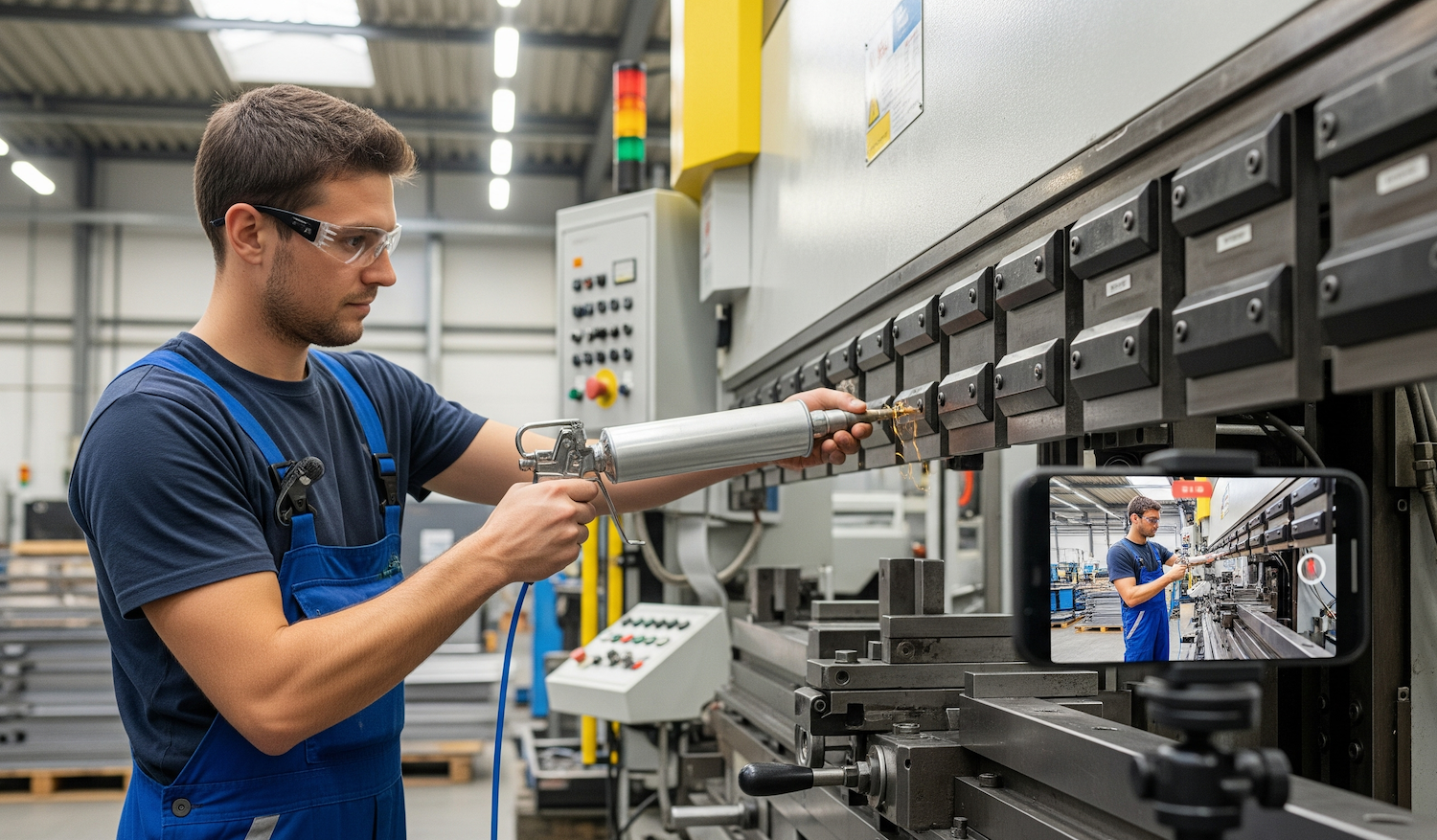
The same applies to craft knowledge, onboarding and training. Instead of working through long manuals, new employees can use curated video guides created by the best experts in the company.
From video to knowledge platform
Once knowledge has been extracted from videos, it needs to be organized and made accessible. A central knowledge platform stores transcripts, timestamps, screenshots and summaries in a structured way.
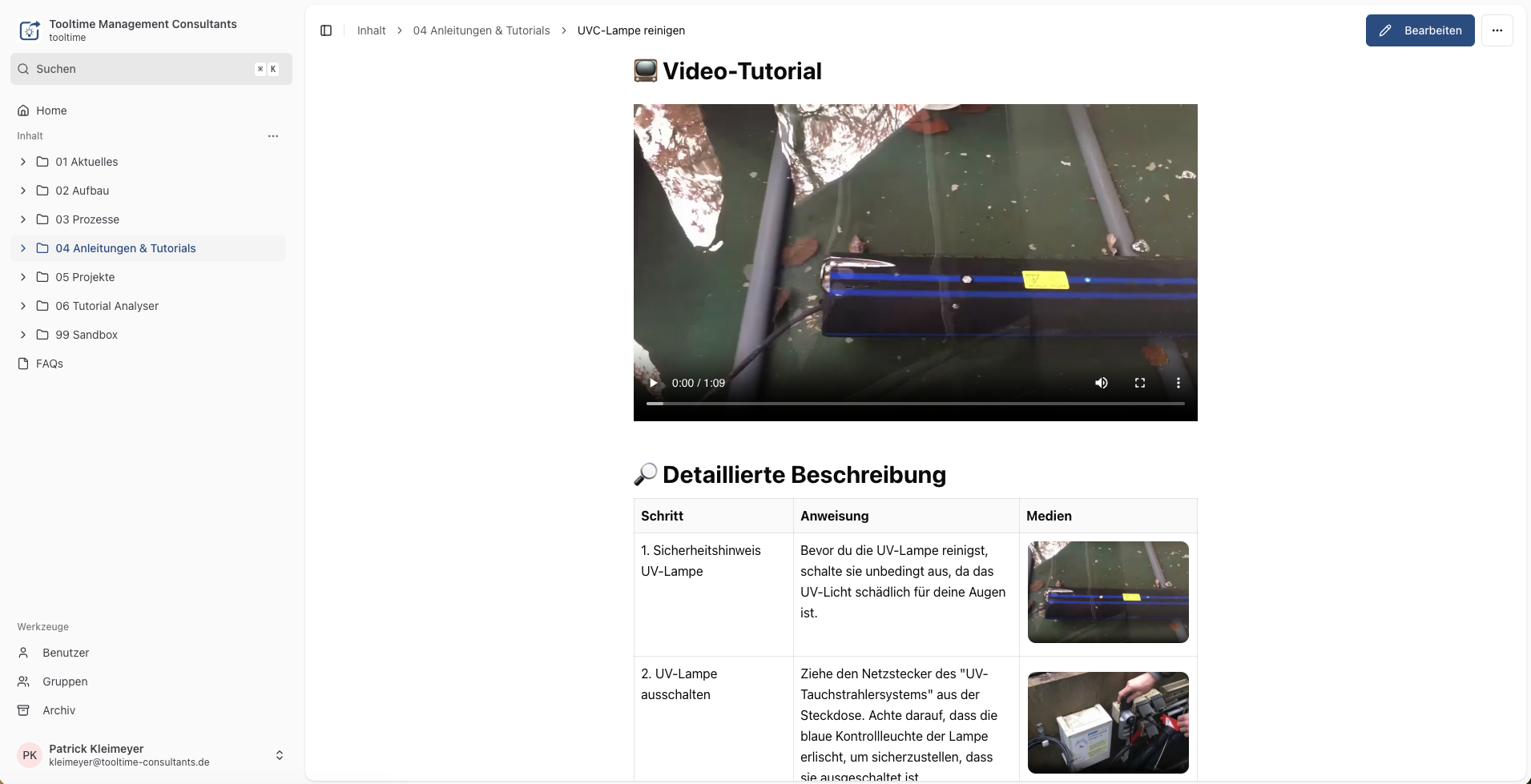
Knowledge page with tutorial and step-by-step guide in KNOW&SHARE.
Conclusion
Transforming videos into dynamic knowledge resources is no longer a distant vision. AI-supported analysis helps companies preserve and use one of their most valuable assets: knowledge.